
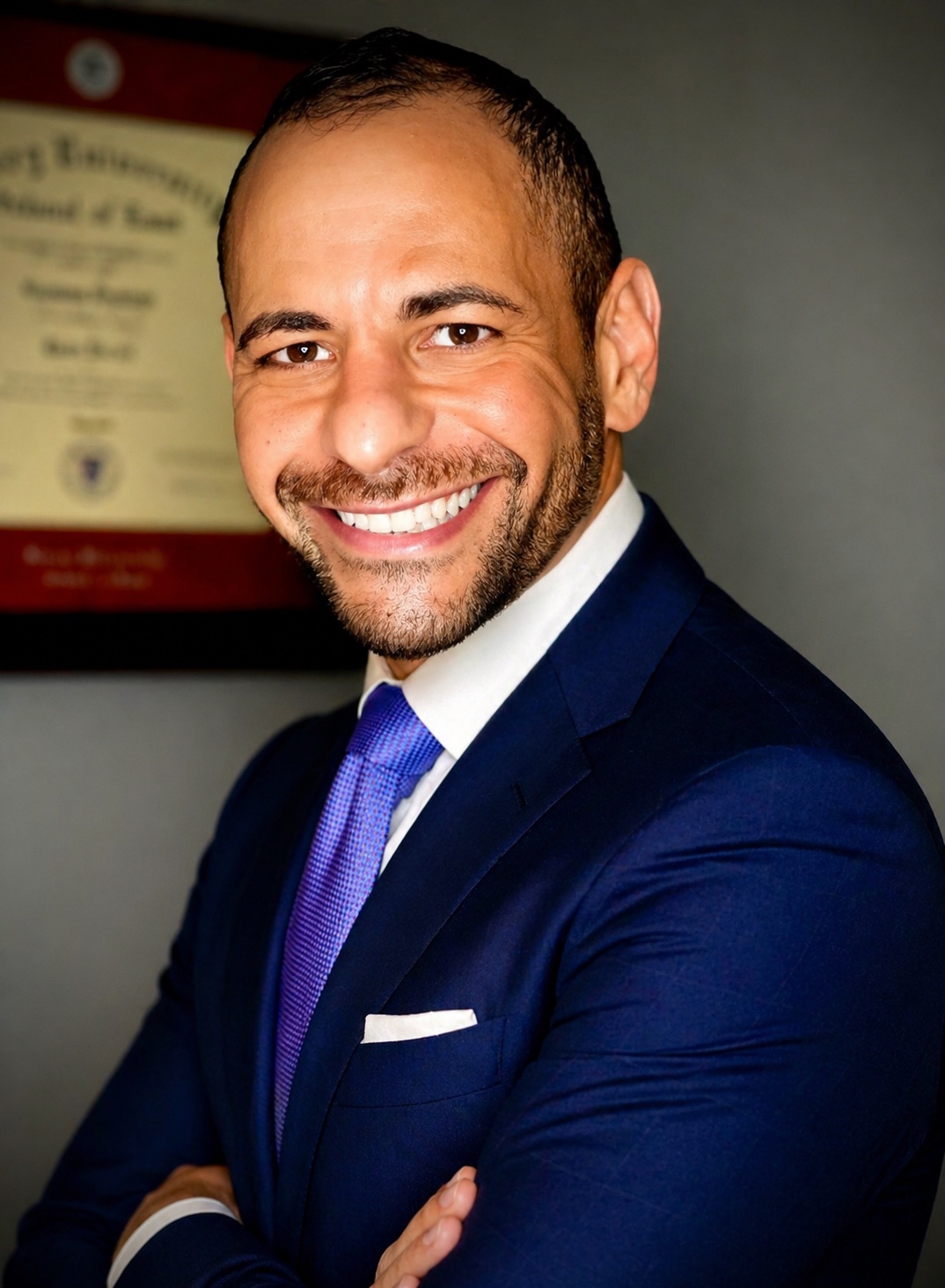
 By Abraham Elmazahi, Esq.
In August 2024, Kevin Finley returned to his Winter Springs home after dropping off his children. Winter Springs police officer Erik Schwartz believed Finley had committed a traffic violation and then avoided an attempted stop. Finley maintained that he never knew the officer was pursuing him. At his home, the officer confronted him at gunpoint and detained him in handcuffs.
Finley was not prosecuted for felony fleeing and eluding, although the officer discussed that possibility. Instead, Finley faced a criminal reckless-driving citation and additional civil traffic citations. The criminal charge carried a possible jail sentence. Finley's Tesla had recorded multiple views of his drive, including the officer's movements behind him. The footage became central to the defense.
The case reached trial on July 16, 2026. After the defense introduced the Tesla video, the judge granted a renewed judgment of acquittal, finding insufficient evidence of the willful or wanton disregard required for criminal reckless driving. The jury did not render a verdict. Officer Schwartz later resigned while the department was investigating the encounter. FOX 35's contemporaneous report and the July 16 trial transcript document the prosecution and its outcome.
Police Have Bodycams. Drivers Have Dashcams.
An officer's account can carry enormous weight. An arrest or criminal charge may begin with what that officer says happened. When the driver disputes it and no useful recording captures the conduct, the case can become the driver's word against the officer's. That is a serious imbalance for someone facing prosecution.
Body-worn cameras and police dashcams can document law-enforcement encounters, but they may not capture what happened before a stop, and the driver does not control their placement or activation. A Tesla camera or ordinary dashcam can provide an independent view: where the patrol car was, when its emergency lights were visible, how vehicles moved, and what happened before the officer approached. The recording can challenge an officer's account without depending solely on the driver's testimony.
A contradiction on video does not, by itself, prove an officer intentionally lied. It may reveal a mistaken observation, an inference the footage does not support, or a genuine dispute that requires more evidence. Cameras have limits too: a rear-facing view may show emergency lights without proving what the driver actually noticed. But when an officer's accusation is wrong, independently recorded footage may be the strongest available way to show it.
The Winter Springs Case on Video
This article was prompted by attorney John H. Bryan's October 16, 2026 video, Tesla Saves Owner From Prison, published by The Civil Rights Lawyer. The video examines footage and the prosecution; it is not our firm's production or representation.
Watch the original video on YouTube. The published video page includes a link to the trial transcript.
The Tesla Footage Was Admitted at Trial
In the Winter Springs case, defense counsel asked Finley how the vehicle's cameras worked, whether they were operating, how he retrieved the recording, and whether the offered video was altered. Finley identified the video as his Tesla recording and said it fairly and accurately reflected the driving shown. The prosecutor made no objection. The judge admitted it as Defense Exhibit 1. See the trial transcript, pages 88–90.
The court admitted the recording. That alone defeats the claim that footage from a private vehicle is categorically excluded from a criminal trial. A recording does not become inadmissible simply because police did not make it. The defense still must establish a proper foundation, and the State may raise specific objections in another case.
After viewing the evidence, the judge concluded that the State had not established the more demanding criminal reckless-driving elements. Section 316.192, Florida Statutes, requires willful or wanton disregard for the safety of persons or property. The court found the proof inadequate for that charge, even though lesser traffic conduct remained possible.
Is Dashcam Video Hearsay Under Florida Law?
Ordinarily, the images recorded automatically by a dashcam are not hearsay. Hearsay generally concerns an out-of-court assertion made by a person and offered to establish the truth of what the person asserted. A camera capturing vehicles moving through an intersection is recording events, not making a human assertion. See section 90.801, Florida Statutes.
Audio is a separate question. If the recording contains a passenger's narration, an officer's conversation, or statements later added as captions, the purpose for which those words are offered can raise hearsay and other objections. A video can have admissible images without every statement on its soundtrack being admitted for its truth.
More often, the threshold dispute over silent camera footage is authentication. Under section 90.901, the proponent must present sufficient evidence that the recording is what the proponent claims. A driver or another knowledgeable witness may establish that it fairly and accurately depicts the events. When no eyewitness can do so, courts may consider the reliability of the recording process under the silent witness doctrine. See R.V. v. State, No. 3D22-1697 (Fla. 3d DCA Feb. 21, 2024).
Time and date, access to the original file, possible editing, camera operation, and the identity of persons or places shown are important foundation questions. A duplicate may be admissible under section 90.953, but an authenticity dispute or unfairness can still matter. The fact that a video appears persuasive does not by itself eliminate foundation, relevance, or fairness objections.
Show the Prosecutor What the Officer Got Wrong
The defense does not have to wait for a jury trial to confront an officer's account with video. Counsel can present the recording to the prosecutor, compare it with bodycam footage, patrol-car video, dispatch records, and the officer's statements, and identify conduct the camera does not support. Depending on the evidence and procedural posture, that review may support a request to decline, dismiss, or reduce charges, further investigation, or focused motion practice and cross-examination.
A prosecutor can consider potentially exculpatory video before every trial-admissibility question is resolved. If the case proceeds to trial, defense counsel still needs to authenticate the recording and address specific objections.
Keep the Original Recording
If your vehicle or dashcam recorded a police encounter, preserve the original file immediately. Some systems overwrite footage on a loop, and exported clips may lose information. Keep the original storage media where practical, save an unchanged duplicate, record when and how it was retrieved, and preserve any associated timestamps or metadata.
Do not crop, annotate, or enhance the only remaining original. Working copies can be prepared for review, but the unaltered source should remain available. Identify every camera angle and note gaps in recording. Provide the footage to your lawyer promptly rather than assuming an officer or prosecutor has seen it.
Do not interfere with an officer or reach for a recording device during an active detention without regard to safety and lawful commands. Preservation can be addressed once doing so is safe.
Elon Musk Shared the Story
The Winter Springs story also attracted Elon Musk's attention. His September 20, 2026 post on X appears below. His comment referred to Finley's case; it is not an endorsement of any lawyer or law firm.
Tesla is not the only vehicle that can record useful evidence. An ordinary dashcam can provide an independent view when an officer and driver disagree about what happened. The video must still be examined carefully, and its legal significance depends on the charge and what the footage actually shows.
An Officer’s Account Is Not the Final Word
An officer's accusation is not a verdict. Police testimony can establish facts, but it can also be challenged, just like other testimony. When a driver's camera contradicts a material part of the officer's account, the defense should examine the original recording, the charge's elements, and every available law-enforcement recording. The State still bears the burden of proving the offense.
Finley's prosecution ended with a judgment of acquittal after the Tesla footage was admitted and the judge determined that the State's evidence did not establish criminal reckless driving. That outcome cannot be promised in another case. But when your word conflicts with an officer's, a camera you control may supply evidence that neither a bodycam nor a police report captured.
If you are facing a Florida charge arising from a traffic stop or contested police account, contact The Elmazahi Firm. Existing clients should communicate through The Elmazahi Client Center.
The Raw Analysis
The takeaway from this story is not that police officers are liars. It is not that they are corrupt. The takeaway is that police officers are human beings, just like you and me.
Police officers are supposed to protect us from criminals. But who protects us when the accusation comes from the police? It's not a matter of who, but what. Cameras.
The police uniform carries tremendous authority. And with that authority comes an enormous amount of credibility. Society has conditioned us to trust the person wearing the badge. When an officer's account conflicts with that of an ordinary citizen, the officer often enters that credibility contest with a substantial advantage.
But underneath that uniform is still a human being.
Police officers have the same limitations of perception, memory, and judgment as everyone else. They experience the same cognitive biases and distortions. Their eyes do not suddenly become video cameras when they put on a uniform. Their memories do not become more reliable simply because they carry a badge.
And I'm not talking about corrupt officers or officers who deliberately lie. I'm talking about honest officers who genuinely believe they saw something that never happened, or who remember an encounter differently from how it actually unfolded.
An officer can be completely honest and still be completely wrong.
An officer’s sincerity, confidence, or conviction is not proof that the accusation is accurate. His account still needs to be tested against the evidence.
For someone accused of a crime, the consequences can be devastating. Imagine being innocent but having nothing to contradict an officer's mistaken account except your own testimony. Now imagine trying to convince a jury that the officer was wrong. The credibility attached to that uniform can become an enormous obstacle, even when the officer is acting in good faith.
Cameras are changing that. Instead of simply asking someone to believe your account over an officer's, you may have an independent recording of what actually happened. Cameras have limitations, of course. They cannot capture everything, and footage must be evaluated in context. But they do not suffer from faulty memory or the cognitive biases that affect human perception.
My advice is to record your interactions with the police.
You do not need a Tesla. You can install an aftermarket dashcam in almost any vehicle. And practically everyone already carries a smartphone with a camera.
Police officers have bodycams, but do not rely exclusively on the police to document an encounter that could later become the basis of a criminal prosecution. Exercise your right to record officers performing their public duties when you can do so safely and lawfully. You generally do not need an officer's permission to record police activity in public. Do not interfere with their duties, make sudden movements during a detention, or disregard lawful safety commands.
Record your own footage. Preserve the original recording.
When your word is up against the police, the video will be the judge and jury.
Disclaimer
This article provides general legal information, not legal advice, and creates no attorney-client relationship. Specific facts, original recordings, evidentiary objections, and local procedural rules control individual cases. The Winter Springs case is a reported third-party matter, not a case handled by this firm.